Showing posts with label Cash Flow. Show all posts

Tuesday, July 14, 2015

Strategic Planning Analogy #553 Part 1: Wrong Documents


THE STORY
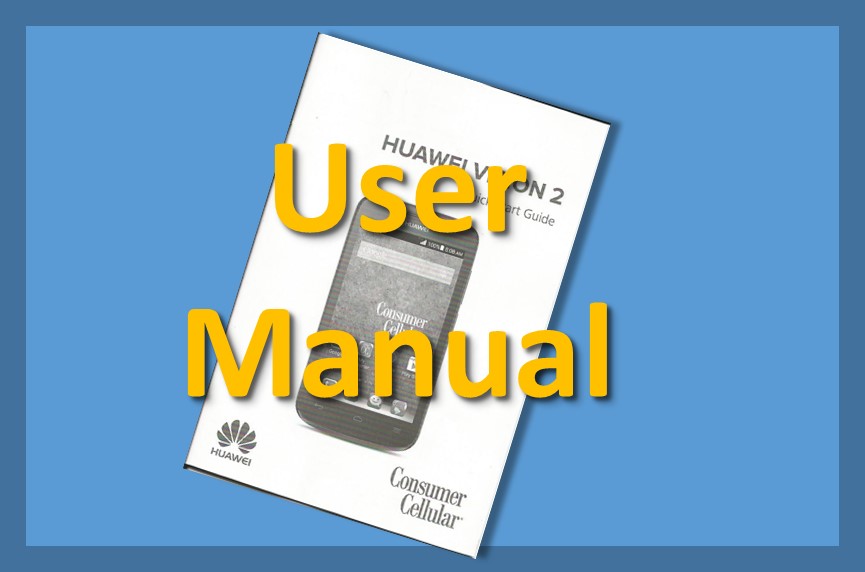
I recently purchased a new smartphone. It came with a small booklet of instructions. The booklet gave me the information I needed to enjoy my phone.

However, as useful as that phone instruction booklet was to me, that doesn’t make it the ideal booklet for everyone. For example, what if that tiny instruction booklet was the only document given to the people who had to manufacture the phone? It would be a worthless document for the manufacturer, because it only talks about how to USE the phone, not how to MAKE it. They wouldn’t know what to do.

Because the manufacturer is a different audience, with different needs, it needs a different document.


THE ANALOGY
The key documents from a finance department tend to be the:
·       Income Statement;
·       Balance Sheet; and
·       Cash Flow Statement.

Because they are such important documents, finance departments like to use them as much as possible. They even like to use them as the primary documents for strategic planning.

But forcing planners to use the income statement, balance sheet and cash flow statement as their primary documents is like asking phone manufacturers to rely on the owner’s instruction booklet as their primary manufacturing document. It’s inappropriate.

The phone user booklet is designed for people who want to use the finished product after it is made. It is not designed for the people who have to design, create and manufacture the phone. For them, other documents would be more useful.

Similarly, the income statement, balance sheet and cash flow statements portray a company “after the fact.” They show the finished condition of the financials. Their primary audience is not the people who build the business, but the people who interact with the finished product, like investors and bankers and regulators.

If you want to design, create and “manufacture” (i.e., implement) the business model, then you need other documents. Over the next several blogs, I will be describing the types of planning financial documents which should be used INSTEAD of the income statement, balance sheet and cash flow statement as your primary strategy financials.


THE PRINCIPLE
The principle here is that strategic planning is more effective if you use planning documents instead of user documents. In this blog, we will look at some of the shortcomings of applying “user documents” for planning. In subsequent blogs, we will look at superior planning documents for planning.

1) Only Numbers From Ledger
The first flaw is that the income statement, balance sheet and cash flow statements are primarily numbers from the general ledger. They don’t mention strategy anywhere (in words or numbers). There is absolutely no way of knowing what part of any number is connected to what strategic initiative or mandate.

For example, you may have a number of strategic initiatives which impact sales, but with a single sales line on the income statement, there is no way of knowing:

  • What are the expected baseline sales?
  • What sales impacts are specifically expected to come from each strategic initiative?
How can you test the reasonableness of your sales line if you don’t know what actions are connected to it and what is expected from each action?

Another problem with only numbers is that, as we all know, there is more than one way to hit a number. For example, I can drop manufacturing costs by eliminating manufacturing and only sell out of inventory. That will work only until inventory runs out, and then you are in big trouble. The overall strategy is ruined, but you will look great on your manufacturing expense number. Without a documented link between strategic actions and numeric outcomes, one can “game the system” and hit the numbers for all the wrong reasons.

So without words about strategy and specific numbers connected to each initiative (even if the numbers do not have a label in the general ledger), the document is fairly worthless as a strategic tool.

2) Bias to Cost Cutting
Standard financial documents are mostly full of expenses. Therefore, if you want to make a quick impact to these documents, there is a bias towards focusing on lowering expenses/cutting costs. Unfortunately, cost cutting is not the only strategic option, and there are often many far superior options. Perhaps instead of focusing primarily on cost cutting, you company would be better off with a strategy focusing on one of the following:

  • Improving Quality
  • Improving Speed to Market
  • Changing Distribution Channels
  • Expanding into New Geographies or Customer Segments
  • Broadening the Product Line
  • etc.
Even though these may be superior strategies, many of these initiatives would probably increase expenses in the short run. But, by using documents with a bias towards cost cutting, I may be hurting my chances of approving or executing on these superior options. I would be better off if I was using documents that have quality, speed, etc., as prominent in them as costs.

3) Linear
Most of the standard financial documents are linear in design: you start at the top and work your way down to the bottom. Unfortunately, strategic planning is more circular.

Take for example, the relationship between marketing and sales. One time, I was in charge of the advertising budget for a company. The budget person, in a desire to cut costs, asked me to cut the advertising budget by around 20%. I asked him if they were going to cut the sales line as a result of my cut in advertising. He said no. Therefore, I suggested to him that they cut the advertising to zero, since it was apparent they saw no connection between marketing levels and sales levels. If you don’t think sales will fall as advertising falls, you may as well eliminate the advertising completely.

The point I was trying to make was that there are strategic implications which ripple throughout a financial statement when you alter a key component (like marketing). You cannot change one line at a time in isolation and expect everything else to stay the same. At the same time, you have to change all the ripple effects, too. Therefore, you need planning documents which make it easier to see the strategic links to other financials.

4) Mixed Responsibilities
Most standard financial statements tend to be all inclusive—selling, operating, and overhead are all jumbled up into the same document. This makes it hard to create a sense of ownership and accountability for any standard financial document. And if something goes wrong, there is all sorts of finger-pointing to the other people included in the document.

A better approach would be separate planning documents more segregated towards one main area, with the links to the other areas spelled out.


SUMMARY
Just as the manufacturer of a phone needs different documents than the user of that phone, the “manufacturer” of a business strategy (planners and the ones the planners work with) needs different documents than those who interact with the finished product (bankers, investors, regulators). Right now, the primary documents from finance are pointed towards those who interact with the finished product. That’s fine for them, but not for the strategists. The strategists are the manufacturers of the strategy, so they need a different kind of document. In subsequent blogs, we will be discussing how those documents should look and work.


FINAL THOUGHTS
I also recently got a new washer and dryer. I’m glad they sent me the right type of documents. I hope you get the right types of documents to the participants building your strategy.

Saturday, April 25, 2015

Strategic Planning Lesson: Career Half-Lives


THE STORY
Over the course of my long career, I’ve been through a lot of job interviews—from both sides of the table. Whether I was hiring or trying to get hired, I’ve seen the same trend—the average length of an employee’s stay at a company has shrunk.

In my early days, the general rule was that if you had spent less than three years at your previous company, you were automatically seen as a “loser.” To overcome this initial impression, the individual had to have a very good story to explain why they were leaving after less than three years. The general rule was to stay for five years or more.

Now, people label you as a loser if you spend more than three years at a company. Today, if you stay at the same place for over three years, you’d better have a good story to explain why you stayed so long. The general rule now seems to be to get out in two years.

If you don’t believe me, take a look at a handful of resumes on Linkedin. As you go through the career time-lines, most resumes will have the time spent at a given company get shorter and shorter as you get closer to the present.

It’s almost as if people’s careers have a half-life (like uranium). Each succeeding job is half the life-time of the time spent at the prior career location. It’s gotten to the point where about the only difference between a short-term consultant and a short-term employee is who is paying for the health insurance.


THE IMPLICATION
Traditionally, strategic planning has been concerned with creating a great long-term future for your company. But, if the key people only plan on sticking around for about two years, where is the incentive to work hard on building long-term improvement? Even for a five-year plan, a two year employee will have changed companies twice before the plan horizon is completed. For a ten-year plan, the two-year employee will have changed companies five times before the plan is over.

In this environment, the person setting up the long-term plan is not incented to do it well, because they won’t be around long enough for it to matter to them. And the replacement person who inherits the strategy two years in has no emotional attachment to the plan built by people no longer there. Usually, they abandon the predecessor’s plan before it gets traction and start the process all over again. So you end up with a lot of half-hearted planning starts, but no pursuit to the end.

As a result, I’ve witnessed strategy get perverted into something that has nothing to do with long-term planning. It’s just a tool for an employee to get a quick bullet point on the resume in order to get the next job. And that’s not good for the company’s long term health.


RESULTS
Instead of real, long-term plans, one tends to get one or more of the following:

1. Lots of M&A
If you want to create a big bang in a short time, make a big divestiture or acquisition. It’s the biggest impact you can have in the shortest amount of time. That’s why activist investors are always pushing to restructure companies—it’s the fastest way to push a change in the stock price. Being part of large deals like that also looks good on the resume—a big accomplishment in a short period of time.

Lately, there has been a steep rise in the amount of M&A and restructuring activity. I think one of the factors pushing the volume up is the short time horizon of the two-year employee.

“Strategy By M&A” may initially look impressive, but it is rarely the best long-term approach as the primary force of strategy. Here are some of the pitfalls:

a)     Most acquisitions fail
b)     There is more money chasing deals than there are good deals, pushing up prices to levels where it is difficult to get a good return on the deal.
c)     When you pay a premium for an asset, you are giving a lot of the upside cash potential to the seller, while still keeping all of the future risk for yourself.
d)     What cash doesn’t go to the seller often goes to lawyers and deal-makers. This further shrinks the potential return for yourself.
e)     The tough part of the deal is the integration phase, and the short-timers won’t stick around long enough to make sure that gets done properly.
f)      A lot of what you buy in a deal is their employees. If their employees don’t stick around, what have you really purchased?

2. Bring Cash Forward
Another way to look good quickly is to take a long-term cash flow and compress it into a short-term cash flow. For example, a lot of state governments in the US decided to sell their toll roads to private companies. That way, instead of waiting decades to get their hands on the toll money, they got a big check up front. Boy, does that ever look good on the resume to claim that you got all that cash in such a short period of time.

That’s why a lot of retailers, most recently Sears, have been selling their properties to mall developers and then leasing back the property from them (called a “sale and leaseback”). They get a big check right away from the developer. Similarly, I recently heard that Ohio State University sold all of its parking structures to a foreign company for a huge paycheck. What a great photo opportunity to be shown giving the company such a big check.

The problem with this approach:

a)     The buyers are not benevolent people. They expect to get a handsome return on that investment. Therefore, you will never get paid what the asset is worth—you will get paid its worth less the profit the buyer expects to make.
b)     If the deal goes sour in the future, the buyer will stick it to you in the future with higher rent payments. When Sears owns its property, it has frozen its destiny. Now that it rents, it does not control its destiny.
c)     Even if you get someone else to pay the rent (like drivers for toll roads and students for college parking) these other people will not be happy if they are taken advantage of by the escalation of fees by the new owners. Who wants the fate of their customer satisfaction in the hands of people who don’t care about whether your customers are satisfied?

3. Playing Politics
Politicians love creating laws or deals where the tough parts don’t occur until after they leave office. That way, the nastiness messes up the career of the next office-holder, not them.

Short-term employees are increasingly borrowing this tactic from the politicians. They are pitching plans where the big costs and/or big benefits are not to occur until after the time where they plan to leave. That way, the negative impact of the big costs (which have been pushed out) won’t hurt them. And because the promise of the big return is pushed out, the disappointment when the return is less than promised doesn’t hurt them, either. They can blame that disappointment on the bad execution of their successor.

The goal here is not to make the company better long-term, but to just push the bad stuff and disappointments out a little further, so that the next guy gets the blame.

In an earlier blog, I went into more detail about the problems of “hockey stick” plans that push everything into the future.

4. Project Orientation
One thing that looks good on the resume (and can be done in a short period of time) is the completion of projects. You can point to a completed task and say, “Look, there is something I did.”

But completing projects and moving a company forward are not necessarily the same thing. If all you want to do is check it off a list of “projects to do,” then your goal is to get it done rather than try to move the company forward.

For example, you may have a project of building a mobile app for your company. Well, just because you got an app up and running does not guarantee that it will help the company long-term. In fact, the best way to guarantee that you get the project done quickly is to dumb it down into something simplistic and not very useful. Trying to get the project integrated into the business where it impacts operations is very messy and time consuming. It increases the risk that the project won’t get done (so you cannot put it on your resume). Therefore, the incentive is to not make it very useful.


SUMMARY
Long term planning is very difficult to do when the key people only want to stick around for about two years. These short-timers will try to hijack the long-term planning process for their short-term interests. They will try to steer the process into:

a)     Too much M&A; or
b)     Shifting cash flow forward; or
c)     Moving horizons beyond their tenure; or
d)     Shifting to a Project Completion orientation.

Watch out for these tricks. They rarely lead to the best long term future. 


FINAL THOUGHTS
You harvest what you sow. If you are not planting any seeds for the long term, there will be nothing to harvest in the long term.

Wednesday, December 26, 2012

Strategic Planning Analogy #481: Law of Extremes


THE STORY
Back about 40 years ago, Wal-Mart had not yet fully cemented its image as a low cost leader.  Other retailers were still challenging Wal-Mart on price supremacy.  One of those chains was TG&Y variety stores.

TG&Y decided to get into a price war with Wal-Mart.  The item chosen to go to war over was a pair of jeans.  TG&Y would lower the price on jeans and Wal-Mart would retaliate with an even lower price.  This pattern continued for many rounds.

Eventually, Wal-Mart dropped the price of jeans to 9 cents a pair.  At that point, TG&Y gave up and stopped the price war.  Wal-Mart had won supremacy on price, and not too long thereafter, TG&Y ceased to exist.

 
THE ANALOGY
Yes, 40 years ago, you could buy a lot more for 9 cents than you can today.  But even 40 years ago, 9 cents was an unrealistically low price for a pair of blue jeans.  Every jean sold at 9 cents would be a huge loss for Wal-Mart.  But that was the sacrifice Wal-Mart had to make in order to win the image of price against TG&Y.

Times may have changed in the last 40 years, but this type of activity still goes on.  Business leaders understand the value of owning an image and will go to extremes in order to win that image.  This seems especially true on the internet. 

In order to create a large network, internet firms will go to great lengths to get people hooked into their system.  Most end up giving away their product for free.  Other go even further by “paying” people to get on-board, either with badges, coupons or some other form of promotion.  It’s hard to make a living if you have to pay people to use your product.

And it’s not just price where companies go to extremes.  Luxury automobile brands are fighting against each other to own the word “luxury.”  They keep upping the ante by adding ever more exotic features to their automobiles.  At some point, even many luxury auto buyers will balk at paying the premium so that auto makers can get an adequate return on investment for these exotic features.

For most auto dealers, the maintenance area is among its most profitable areas, even more profitable than selling cars.  But, to increase the luxury treatment experience, many luxury dealers are throwing in maintenance for free.  Now, they’ve cut off a key source of profits.

The world is very competitive.  It takes a lot to dramatically own a position in that competitive market.  Every winner has to go to extremes to own their position, be it in price, luxury, service, convenience, technological innovation or whatever.  It’s as if the whole world is becoming the equivalent of 9 cent jeans—a world where the only way you can win is to create a costly, unsustainable extreme.

How do you create a profit if the entry level cost to achieve a winning position is unsustainably high?  That requires a sophisticated strategy.

 
THE PRINCIPLE
The principle here has to do with what I call the Law of Extremes.  It is one of my 23 laws of strategy.  (I know I said in an earlier blog that it was 22 laws, but I’ve since added another law.)  The law of extremes goes like this:  “Creating performance levels needed for ownership requires trade-offs and subsidies.”

Another way of saying this is that when the core business can no longer sustain the extremes, you have to:

1)      Add secondary businesses (called subsidies) to provide cash to cover the extremes; and/or
2)      Subtract secondary activities which take away cash from the building the extreme position (a process called trade-offs).
We will look at each of these separately.

Subsidies
Subsidies are non-core activities or businesses which are principally done only to fund the core.  An example of this practice is the “Freemium” model used by many internet businesses.  The idea is that the core business is free.  Yet in order to afford to give away the business for free, a small subset (often under 3%) pay a price in order to get premium extras.  In other words, around 3% of the users of the internet site subsidize the activity of the other 97% so that the site can make money.  Many internet sites use a freemium model like this, including Linkedin and Pandora.

Another subsidy common on the internet is to use advertising.  If you cannot get the users to pay for your extreme pricing position of free, then you have to get advertisers to pay for the site.  Another subsidy example is when internet sites sell information about you to other business that would pay for that information (watch out when companies put cookies on your device—it can be their door to a subsidy business selling your behavior).   

This subsidy phenomenon also occurs in the retail space.  In consumer electronics, the pricing policies are very extreme, often selling the main items near or below cost.  To subsidize these prices, the retailers need to bundle profitable subsidy purchases to the transaction.  A familiar one is the extended warranty, which is often more profitable to the retailer than selling the item being insured.  Other examples are selling ad space on the screens of the computers being sold, selling extra ink with the printer, selling smartphone accessories, and so on.

This is also seen in fast food restaurants where the core hamburger is sold at a loss and is subsidized by the sales of more profitable french fries and beverages.  (I’ve gotten in the habit of buying a second burger instead of the fries in order to get a better extreme value for myself). 

The irony here is that in a world of extremes, the core business becomes almost like a loss-leader for the subsidy add-on businesses.  At some point, it’s hard to tell what is the real core business anymore.  IF the subsidies are where all the profits come from, does that become the new core?  The extreme image won with the traditional core could now be seen as a loss leader positioning to mask the real positioning, which is to be best at selling the subsidies.

It goes to show that business strategies are getting more complex.  If subsidies are not integral to your business model, the model may no longer work in a 9 cent jeans world.

Trade-Offs
If subsidies are about adding income to the business, then trade-offs are about subtracting costs from the business model.  The principle behind trade-offs is as follows.  If you try to be all things to all people, you will probably never obtain an extreme position on anything.  For example, if you try to be the highest quality, lowest priced and fastest in innovation, you will have to make compromises which will prevent you from being the most extreme in any of these attributes.   There will be specialists focusing on only price or only quality or only innovation which will be the most extreme and win the battle for these positions. 

Therefore, to win in one space, you may need to stop pouring money into other spaces, so that more money can be funneled to the space where you want to win.

An example would be extreme low price “hard discount” grocers, like Aldi, Save-A-Lot, and Lidl. They have prices substantially below conventional grocers—extreme enough to win the low price image.  Yet those low prices are sustainable because these firms make trade-offs.  They stop doing many things the conventional operators do which add costs.  Examples include:

1)      Smaller, Less Costly Assortments (only one brand in one size per category)
2)      Eliminating Lower Margin Branded Goods by Going Direct to the source to create their own brand.
3)      Large reductions in labor by not having service departments, not stacking products individually on shelves, etc.
4)      Lower rent by building smaller stores in less prime real estate.
By trading away variety, ambiance, convenience, selection and other such factors, they can divert cash flow from those activities into sustainable extreme prices.

Southwest Airlines is another example.  They make money when other airlines don’t because they do more trade-offs than traditional airlines.  Activities like only selling point to point tickets, refusing to sell tickets on third party travel websites, focusing on only one-sized plane, and other non-conventional approaches, they have eliminated a lot of costs borne by their competitors.  This allows them to focus on the things important to their image and still make a profit.

The idea with trade-offs is that your successes is defined as much by what you don’t do as by what you do.  Your strategy needs to delineate what activities go onto each list (the do’s and the don’ts).


SUMMARY
In a highly competitive world, it takes extreme levels of performance in order to win a position.  Gaining extreme positions is costly.  In order to afford the cost and still make a profit, firms need strategies about subsidies and trade-offs.  Subsidies are the add-on activities which provide extra cash flow beyond the core.  Trade-offs take away activities which to not reinforce the extreme position in order to provide extra cash flow to invest in the extreme.

 
FINAL THOUGHTS
The things which “delight” the customer tend to “deplete” the cash of the company.  To remedy the situation, the company needs to “destroy” unnecessary costs and “deploy” subsidy businesses. And that is “de-truth.”

Wednesday, December 19, 2012

Strategic Planning Analogy #480: Landing a Strategy


THE STORY
I used to live in a city which had a small regional airport.  The city wanted to get more of the large airlines to land at this airport, but the airlines kept refusing.

The airlines said that they would not schedule flights to that airport because the runway was too short.  Sure, it was long enough to land the smaller planes that the airlines use, but not long enough to land the largest jets.  Because the airlines want flexibility in the use of their airplane fleet, they didn’t want to schedule flights into airports which couldn’t handle their largest planes.

After hearing the complaints, the city invested in building longer runways.  And not long after the longer runway was built, a large 747 jumbo jet landed at the airport in grand fashion.

I think it was many, many years later before the second large jet landed there, but it didn’t matter.  The renovations and the longer runway resulted in getting more scheduled flights at the airport.

 
THE ANALOGY
I like to use the term “landing a strategy.”  This concept refers to getting a strategy from being just a cool idea floating in the clouds to being a reality playing out on the ground where the company is operating.

Landing a strategy is a lot like landing an airplane.  If the airport’s runway is too short, the larger jet will not be fully landed before it runs out of runway.  The plane will keep moving at a high rate of speed beyond the edge of the runway and crash into something, creating a total disaster.  That’s why airlines insist on having long runways before committing to an airport.

It takes a lot of time and money to land a strategy (to get it from idea to reality).  If you run out of time and money before the strategy is fully landed, you are like a pilot in a big plane that ran out of runway.  Your strategic attempts are about to go off the runway and crash into something, creating a total disaster.

Due to our optimism, we may think we need a shorter runway (less time and money) than we really need to land our strategy.  As a result, we may already be well into the strategic transformation before we realize that we are trying to land our strategy at an airport (i.e., company) whose runway is not long enough (not enough time or money to finish the transformation).  Then we find ourselves frantically trying to lengthen the runway at the same time our plane (i.e, strategy) is already approaching the runway.  That’s not a very wise approach.

When a strategic transformation runs out of runway, the worst possible scenario occurs.  The old strategy is bankrupt because all the time and effort and money went into the transformation.  The old strategy is too obsolete to create sufficient cash flow to keep the transformation going (running out of money). The time for bankruptcy under the old model keeps getting closer (running out of time).  Yet, because there is not enough time and money left to finish the transition to the new strategy, you don’t end up the replacement strategy, either.  Instead, you are stuck with neither strategy.  A total disaster.

Think about Kodak.  It didn’t start trying to land a digital strategy until the analog business was almost dead.  The old analog business was not producing cash flow and was soon to die (no time or money).  As a result, Kodak’s runway was too short.  They ran out of time and money before a digital strategy could be landed.  The company ran off the runway and imploded.

The airlines in the story had a safer approach.  First make sure the runway is plenty long enough.  Then, only after the long runway is built, will the airlines consider trying land planes there.  Our strategic approaches could learn from this.

 
THE PRINCIPLE
The principle here is about change management.  Nearly all new strategic initiatives require significant change in the business in order to become reality.  You may have a great new strategy, but if you mis-manage the change process to get there, you will not effectively land the strategy.  It will crash and make a disaster.  

If you cannot effectively land the strategy, it is irrelevant how great that new strategy was.  It will crash when you run out of runway, just like a bad strategy.

Therefore, a key piece of change management needs to be assessment of the length of your runway.  If the runway isn’t long enough (not enough time and money), then the process is doomed.

Option #1 Lengthening the Runway
If the runway is too short, one solution may be to lengthen the runway.  In other words, before embarking on the transformation, look for ways to either:

  1. Increase Cash Flow; or
  2. Slow Down the Demise of the Status Quo.
These actions may not have any direct relationship to the change you are trying to accomplish, but if you do not do them, you will not have enough time or money to do those things which directly relate to the change.  So you need to do them as well.

Tactics to lengthen the runway could include:

  1. Selling off peripheral assets.
  2. Restructuring the Balance Sheet.
  3. Massive layoffs in peripheral areas
  4. Sale and lease-back of properties.
  5. Looking for legal or governmental protections of the core to keep threats to the core further away.
One of the main reasons why Ford Motor Company did not have to go through bankruptcy and government bailout while GM and Chrysler did was because Ford had taken many of these types of steps to lengthen their runway prior to the great recession.  As a result, Ford’s runway was long enough to last until they could transition through the economic recession and get to their revitalized strategy.

GM and Chrysler ran out of runway because they did not do enough of these types of things.  Without a lot of outside help, they would have crashed when their runways ran out.

Option #2 Shortening the Plane
If lengthening the runway is not enough, you can try to switch to a smaller plane.  By this, I mean that instead of trying to create massive change all at once, you can chop up the change into smaller bundles (like smaller planes) which require less time and money to land (and thus can use a shorter runway).  Those smaller changes with the quickest payback can be done first and create the new money and extra time needed to land the rest of the transformation.

Thus, you fund the latter change by strategically creating funding via the early changes.

Netflix was originally designed to be a digital downloading service (which is why the company was called Netflix instead of Mailflix).  However, the company realized that it would take massive amounts of time and money to create the Netflix model.  Therefore, Netflix started with a smaller plane (movies by mail). 

Movies by mail required less time and money to start up.  And it got Netflix a huge subscriber base and clout in the marketplace that could be applied to the ultimate vision.  And because the near-term model was profitable, it could fund the efforts needed to make the ultimate transition.

Option #3 Changing the Flight Schedule
A third option is to change the scheduling of your flight—prepare to land your plane earlier.  The idea here is that if you start the transformation earlier, before the status quo deteriorates too much, you have many advantages:

  1. The old strategy is stronger and producing more cash flow to fund the landing.
  2. The company’s image and clout are stronger which makes it easier to introduce your change to the marketplace.
  3. The ultimate demise of the status quo is further away, so you have more time.
Kodak essentially invented the world digital imaging.  They had plenty of time, clout and money to implement the change.  The problem was they waited too long to do anything about it.  If they had scheduled the landing of the digital transformation much earlier, the odds are good that it would have succeeded. 

The problem is that companies worry about cannibalization.  After all, the sooner you start the transformation, the quicker you cannibalize the old core.  What you need to realize is that someone is going to eat your core.  Your only real option is to decide whether you are going to do the eating or someone else is going to do the eating.  And if you wait, like Kodak did, and let the competition eat your core, you have no runway to get to the replacement.  All you are is eaten.

 
SUMMARY
Strategic initiatives usually require change.  Change requires time and money (and usually more than you initially realize).  Therefore, if you want to land your strategy, you’d better make sure there is enough time and money to get the change implemented.  If there isn’t, you will need to adjust your approach to that change by either:

  1. Finding more time and money;
  2. Starting with smaller change initiative bundles; or
  3. Starting the whole process sooner.
 
FINAL THOUGHTS
I worked with a company that was running out of runway.  They did not have enough time or money to finish their transition.  The solution they picked was to sell the business to someone with deeper pockets and more time.  In other words, they sold the plane to a company which owned a better airport with a longer runway.  So, before you panic, look for creative ways to get a longer runway.  Creative solutions are out there.

Tuesday, July 24, 2012

Strategic Planning Analogy #462: American War-Idol

THE STORY
Imagine what would happen if military warfare shifted from the field of battle to a TV reality talent contest, like “American Idol.”  Victory would no longer depend on direct combat with the enemy.  No, the victor would be determined by how many in the TV audience vote for a particular army.

Instead of direct combat against each other, each army would perform a military exercise separately.  They would show off their talents at warfare skills. Then the TV audience would vote on which army appeared more skillful. Like on those singing talent TV shows, the singers rarely go head to head in combat.  They just sing their songs and hope the audience prefers their performance over the others.

If this were the case, then the whole idea of warfare would have to change.  Instead of focusing on the best way to physically defeat the enemy, the goal would shift to focusing on the TV audience.  Gaining votes from the viewers becomes the name of the game rather than the old measurements of territory won or lives lost.

I suppose this would cut down on the bloodshed, but it would require a radical rethinking on how to do the act of war.


THE ANALOGY
A lot of the terminology in strategic planning is borrowed from the military.  There are strategic campaigns, strategic attacks, competitive enemy assessments, and so on.  In fact, a lot of the beginnings of business strategy borrowed heavily from military thought.  Military books like “The Art of War” are often placed on the recommended lists for business leaders.

But I think we need to ask ourselves an important question.  Is the modern game of business more like the traditional military, or more like those singing talent shows on TV?  This is an important question, because the way you approach winning under these two scenarios is quite different. 

As we saw in the story, traditional warfare is about direct confrontation with a foe.  The focus is on overpowering the enemy with superior force.  On the TV talent contests, the confrontation is much more indirect.  Yes you still have to overcome a foe, but the decision is made by the audience.  In this case the focus is on wooing the audience.  The enemy is overcome by superior popularity with a third party.

In the modern world of business, the losers go bankrupt while the winners create cash flow.  And where does that cash come from?  It is not like the old traditional warfare or pirate warfare where you would conquer the enemy on the field of battle and then take their wealth as “the spoils of battle.” 

No, it is far more indirect in the business world.  You get the cash flow primarily from people buying your goods and services—your CUSTOMERS, not your enemy.  Yes, you have to convince customers to spend their money with you rather than your competition.  But that is an indirect assault on the competition.  This means that the real battlefield is not where the competition is, but where the customer’s mind is at.

Hence, victory in business today appears more like the American Idol TV show than old war battles.  You focus on trying to get the “votes” of the audience (customers vote mostly with their money in business) rather than directly vanquishing the foe. 

In fact, this trend appears to be getting even greater.  First, thanks to the social media, the customer is becoming even more powerful in determining the winners and the losers.  Second, governments are still legislating and prosecuting to protect companies from direct “anti-competitive” moves on other companies. 

So, direct confrontation is getting legislated away while the voice of the third party consumer is becoming more influential.

Therefore, if you want to get ahead in business, it may make more sense to put away those books on war and start watching more talent contests on TV.


THE PRINCIPLE
The principle here is that your strategic thinking may need to deemphasize the competitive warfare principles and embrace more of a talent show mindset.  In other words, you may need to fixate less on the competition and more on the consumer.

Too much of a fixation on beating the competition can have two major drawbacks.

1.  Too Much Focus on Improving the Status Quo Rather than Seeking Superior Consumer Solutions.
Consider the epic battle in the last century between Kodak and Fuji in the analog film business.  Each was focused on trying to beat the other.  First, a lot of effort was put into trying to have a superior film product over the other.  For a short period of time Fuji would be ahead of Kodak in quality and then Kodak would make a leap to superiority and so on.

Second, serious effort was spent trying to get superior product distribution over the other.  Finally, there was the battle over value/price.

And we all know what happened.  Customers abandoned the category and moved to digital imaging, making Fuji and Kodak both losers in imaging.  All that effort to have superiority over the rival in quality, distribution and value ended up being meaningless.  It didn’t matter who won the direct battle between Fuji and Kodak for superiority in analog film.  If the consumers stop voting for the category, the victory is very hollow.

I had a friend who worked in the US beer industry decades ago.  He would talk about the intense fixation in top management at Anheuser Busch and Miller at that time to try to destroy each other.  Each spent a fortune to try to get an edge on the other in the US market.  All the while, imports and micro-breweries were stealing the hearts of the customers.  AB and Miller were so weakened by the shift that they each had to seek shelter by selling out to larger international firms.

The point here is that the intense competitor fixation is usually placed on competitors doing pretty much the same thing in the same way in the same industry.   It is based on the current status quo and the goal is to be the best at doing what the status quo does.

The problem is that consumers shift, causing the status quo to become severely weakened or obsolete.  While you are staring at your status quo enemy, you miss the competitor of the future who is now only a blip on the horizon.  You miss thinking outside the box to find advantages that have nothing to do with superiority within the status quo competitive system.  Worse yet, you miss out on time that could have been focused on understanding the mind of the customer better (where the real voting takes place).   

Rather than building superior solutions for the consumer, you end up building superior obsolete products. Just because you beat up your enemy doesn’t mean the customer wants you.  A better version of a no longer desired solution still loses the war for votes.

2.  Missing Out on Peaceful Coexistence Options
Another important point is that you can win the hearts of the customer without having to completely destroy the competition.  Many of the losers on the American Idol TV show still went on to have successful singing careers.  Winning on the show did not mean everyone who did not win had to fail.   They could peacefully co-exist in the entertainment marketplace by appealing to different audiences.

This is very true in the business world.  If your strategic position is significantly different from another firm, you can both win by appealing to different segments.  For example, one technology firm can win in the consumer space (like Apple) where another find success in the business space (like Microsoft).   Or one brand can focus on the high-end luxury business while another focuses on the masses.

The idea is that rather than focusing on outdoing a competitor at the same thing, one can often be more profitable leaving the competitor alone and going in a different strategic direction.  In a head to head competitive battle, your advantages tend to be very temporary, because the enemy fights back to gain its own advantage.  In addition, price wars against each other wipe out the profits from any temporary advantages.

By contrast, if you ignore the enemy and go a different way, your efforts can be placed behind more dramatic and more lasting points of differentiation—because the whole strategy is based on being different rather than trying to be better at the same thing.  And with a stronger differentiation, there is less need to resort to price wars.

Strategy is about choosing the right tradeoffs—doing less of one thing so that you can do more of another.  If you choose different tradeoffs than the competition, then you sort of cease to really even be in competition any more.  So long as there is a large enough audience voting for your version of the tradeoffs, you can almost ignore that other company and just focus on being better at your point of differentiation.

If Apple had continued to try to beat Microsoft in traditional computing, it would have died a long time ago.  However, by repositioning itself in an entirely new business model, Apple could win while not having to really worry about Microsoft anymore, because they were no longer in direct competition.  Instead it had the luxury of just focusing on getting better at its point of differentiation (and make a lot of money doing so).

 
SUMMARY
Excessive focus on beating the competition can hurt your chances of success because it takes focus away from areas which can create consumers to spend more money with you.  In particular, it focuses one too much on the status quo, rather than on the superior business models of the future (which typically come from someone who is not a current competitor).  Second, money and effort is wasted on trying to outdo the competitor at the same thing rather than creating more lasting and more profitable superiority through differentiation in positioning.  Remember, the money comes from the customer, not the enemy, so focus on where the money is.


FINAL THOUGHTS
Even the military is starting to adopt more a TV talent show approach to warfare.  The turning point for the US in the war in Afghanistan came when less focus was placed on out-muscling the enemy and more focus was placed on pleasing the citizens living there.  By building roads and schools and other initiatives, the citizens started liking the US more.  As a result they gave less shelter to the enemy of the US, allowing the US to gain more victories.  If even the military is moving in this direction, shouldn’t you?

Monday, January 17, 2011

Strategic Planning Analogy #372: Spreadsheet Games


THE STORY
Sudoku is a wildly popular number game throughout the world. It is based on a 9x9 grid. This grid is further sub-divided into 9 3x3 grids. The idea is to fill all 81 squares in the grid with a number from 1 to 9 such that:

a) Every row will have exactly one occurrence of each number from 1 to 9.

b) Every column will have exactly one occurrence of each number from 1 to 9.

c) Each 3x3 grid will have exactly one occurrence of each number from 1 to 9.

Although the origins of the game go back to the 18th century, its recent popularity began back in 1986, when the Nikoli company in Japan started publishing books of the puzzles (they were the first to label the puzzles “Sudoku").

However, the global popularity didn’t begin until Wayne Gould, a retired Hong Kong judge, developed a software program making it easy to develop new Sudoku puzzles. This software started to be used in 2004. Nearly all Sudoku puzzles today are made with Gould’s software.

It is estimated that the size of the global Sudoku business is in the many hundreds of millions of dollars annually. However, neither Nikoli nor Gould see much of that money. Nikoli never bothered to trademark Sudoku outside of Japan, so they only get Japanese royalties. And Gould decided to let others use his software royalty-free (all they had to pay for was the software). It is estimated that of the hundreds and hundreds of millions made on Sudoku, Nikoli only sees about $25 million and Gould only earns about $1 million.

THE ANALOGY
Although Sudoku is a very popular number game, it has not financially benefitted Wayne Gould to anywhere near the extent of its popularity.

In strategic planning, we have a different number game which is also very popular (at least with strategists). It is the discounted cash flow analysis. The object of the game is to estimate future cash flows and then discount them back into today’s value by taking out the annual cost of capital requirements. When you solve this number puzzle, you will supposedly know how much a particular business or strategy is worth in today’s currency.

Companies spend a lot of time and money playing these discounted cash flow number games. However, I am afraid that many of the businesses using this game are like Wayne Gould. They are not reaping rewards anywhere near the size that one would expect.

In fact, I would argue that much of the claimed benefits of discounted cash flow analyses are no longer there. Much of the effort put behind them is wasted effort. You might be just as well ahead if you let your financial analysts play Sudoku as to have them play Discounted Cash Flow.

THE PRINCIPLE
The principle here is that merely solving a discounted cash flow puzzle is not the same thing as developing a sound strategy. And often, solving a discounted cash flow puzzle does not lead to as much insight as one might think. Therefore, you may want to reallocate your resources to solving fewer of these puzzles and more to deeper strategic thinking.

Is Cash Flow As Important As We Think?
Discounted Cash Flow puzzles are based on the assumption that cash flow is the most important determinant of value. And the proponents of using this game can point to historical evidence showing that cash flow has one of the strongest correlations to value. However, I believe that in the future that correlation will significantly weaken. Here is why I think so.

Cash flows measure how a business earns profits through operations. The underlying assumption is that the value of the business is based on how profitable its operations are. In other words, if you assume that business operations are the way money is taken out of a business, then modeling the cash flows of those operations will give you a good idea of what the business is worth to you.

However, it appears more and more that the primary way companies in the future will extract value out of a business will have little to do with operations. Instead, nearly all of the value will be created at the time ownership transfers.

For example, take a look at a lot of the recent activity in the digital space. Companies like You Tube, Alibaba, Webex, Google and Doubleclick created nearly all their value at the time they either sold out or went public. The value created at that instant was far in excess of any type of cash flow profits that they had created in their past or could be expected in their near future. In fact, it is hard to envision how any sort of cash flow could reasonable get to the evaluations firms such as these created at the moment of ownership change.

I think this will get even more distorted when firms like Facebook, Groupon, Zynga, Twitter and others do their change in ownership. You’re already starting to see it with the ownership money already flowing into these firms. The valuations are incredibly high.

If you put these values into a discounted cash flow model and solve for future cash flow, you get numbers which boggle the mind. Sure, I can mathematically make the models work. The models will solve for cash flow. But just because the model can determine what cash flow is needed to make the model work does not mean that those future cash flows are likely to occur.

Flip that Business
In the new reality, if value is made by ownership transfer rather than through operations, perhaps operational cash flow is the wrong place to be looking when trying to determine value.

Keep this in mind. If I know that I am running a business to create value through ownership change rather than through operations, how do you think I am going to run that business? Obviously, I am not going to fixate on operations, but rather fixate on that which influences the transfer of ownership. My definition of customers is no longer the people buying or using my product. No, my customers are now the people I am going to transfer the ownership to.

Think of the people who flip houses. These people find a distressed house, fix it up, and quickly flip it to someone else at a profit. These people have no intention of ever living in these houses. These people to not make investments which are in the best long-term interests of the house. Instead, they focus on superficial cosmetics (how nice the lawn looks—curb appeal) which make the house more appealing to the next buyer. Let the buyer beware!

Many of the businesses of the future will be operated the same way as house flippers. The original owners have no intention of sticking around long term. They are not incented to do what is best for the company long term. Instead, effort will be placed on the superficial cosmetics which increase the appeal to the next owner. Things like how many visits there are to the site (which may be adding no value but be appealing to future owners) will be focused on rather than building a viable long-term business model (the source of cash flows). Let the buyer beware!

Now you might think that future owners would still be fixated on cash flows. They may say so, and they probably should be, but that is not necessarily reality. With all of the well-financed hedge funds and deep-pocket companies out there right now, there is too much money chasing too few great opportunities. As a result, the rules of supply and demand overtake the rules of cash flow. Businesses get bid up beyond appropriate cash flow values due to supply and demand.

In addition, keep in mind that the next owner may not be a final owner, either. They may be purchasing the business in order to quickly flip it to a third buyer. Look how many businesses are taken private (new owner) just so that it can be flipped back public again a few years later (third owner). Therefore, the new owner may be just as disinterested in everyday operations as the old owner.

So What Should We Do?
If this is the case, then what should we do? If you are the owner wanting to flip the business, look for places where supply (companies) and demand (potential new owners) are in your favor. Focus on things which impact desirability at time of sale rather than fixating on cash flows.

If you are the buyer of businesses, spend more time looking beyond the hype to understand the fundamentals. Warren Buffett always puts more value on business fundamentals than on the magic of pushing around numbers in a spreadsheet. If the basic fundamentals of the business are solid and the business model is solid, then good things usually happen (regardless of the numbers).

Unfortunately, the reverse is often not true. You can make a pretty model with nice numbers, but end up with a disaster because the assumptions are not based on solid fundamentals. Without a solid underpinning, a completed cash flow model may not be any more valuable than a completed Sudoku puzzle.

This is not to say that cash flow puzzles should be abandoned. They are still a valuable tool. Think of them as like the speedometer on an automobile. If you glance at them every once in a while, they can be very useful. But if you stare at them constantly (and fail to look out the window), you will end up in a crash. Rather than agonizing over them to the utmost detail, just use them to check for broad reasonableness.

SUMMARY
As value creation shifts more towards ownership transfer and less towards operational cash flows, the value of cash flow tools also diminish a bit. More thought must be given to supplementing such analysis with deeper looks at either the fundamentals of the business model (if a buyer) or the tricks to increasing appeal to a buyer (if a seller).

FINAL THOUGHTS
Sudoku is played by a narrow set of rigid rules. This makes it easy to know if you have won. By contrast, strategy is played using a wide set of vague rules. As a result, in strategy you can solve the puzzle, yet still lose the game. Don’t assume that strategy is a simple as filling out a few spreadsheets.

Friday, October 22, 2010

strategic planning analogy #359: Does It Fit?


THE STORY
I’m a real sucker for a great bargain. Unfortunately, not all great prices are great deals.

Take clothing, for example. I’ve seen lots of really great clearance prices over the years on clothes. Unfortunately, the clearance assortment usually leaves a lot to be desired. They almost never seem to have my exact size left in stock. Therefore, I’ve been known to buy clothing that doesn’t quite fit me exactly, just because I couldn’t resist the low price. Sometimes, I can make the clothing work. Other times, it just sits in my closet, never worn.

I may have paid a terrifically low price for the item, but it was a lousy deal because it didn’t fit and I never wore it.

THE ANALOGY
It really doesn’t matter how little I paid for the clothes. If they don’t fit, they are worthless to me. It was wasted money.

The same can be said of certain strategic initiatives. They may appear to be excellent opportunities, but if they don’t have a strategic fit with the organization, you will never reap the full benefits of that opportunity. If fact, that great so-called “opportunity” could end up destroying value for your firm because of all the time, money and energy wasted in trying to make it fit, when in fact it does not and can not. You will always be at a competitive disadvantage versus others in that space who have a greater fit with the strategic initiative.

Just as you do not want a closet full of clothes you cannot wear, you do not want a business full of initiatives where you had no strategic advantage/fit. No matter how great the opportunity looks, it has to fit to be a great opportunity for you.

THE PRINCIPLE
The principle here is that great strategies produce great cash flows over their life.

Two Factors Impacting Cash Flows
Two factors impact how much net cash a strategy will produce over its lifetime:

1) The amount of money/time/effort needed create and execute the strategy. These are the efforts which produce the INPUT for your strategy. For example, if your strategy is to become a major player in the smartphone business, you need to expend money/time/effort to design/develop your technology (hardware and software) and find a way to get the smartphone manufactured. Once this infrastructure is developed, you need a process to ensure your technology remains up-to-date and that daily operations run smoothly and efficiently. Without these inputs (a phone, software, and operations to produce them), you cannot be in the smartphone business.

2) The amount of money/time/effort needed to get customers aware of your strategy and make it easy to purchase what you are offering. These are the efforts which produce the OUTPUT for your strategy. Using modern terms, this is the concept of “monetizing” your strategy. For example, to monetize your smartphone, you need things like arrangements with the supply chain (mobile phone carriers and retailers), marketing campaigns, distribution capabilities, and a sales force. And if your business is advertising based, not only do you need a sales/marketing arm to reach end users, but also a sales/marketing arm to reach advertisers. In the case of the iPhone, Apple also needed to develop an infrastructure for developing and selling apps in order to fully monetize the strategy.

To maximize cash flow, one typically needs to keep the costs of inputs low and the net revenues from outputs high. A key way to do this is via strategic fit. Strategic fit is critical in both the inputs and the outputs. Without strategic fit, you will both expend more effort AND get less in return on your inputs as well as your outputs. And in a competitive marketplace, it is difficult to have a winning strategy when others, using strategic fit, can spend less and get more out of the same initiative.

Strategic Fit And Inputs
On the input side, strategic fit occurs when the competencies, skill sets, and infrastructure needed to get a strategic initiative up and running are similar to the competencies, skill sets and infrastructure already possessed by the firm. For example, it is easier to develop the software and hardware needed for a smartphone if you already have the engineering and technical experience to develop things like this in-house. Having brought similar technology to market in the past will put you further down the learning curve. This will make the process more efficient, more timely and more likely to succeed.

Similarly, experience in manufacturing similar products will give you an advantage in delivering the new product you have developed. You will get down the learning curve faster for everyday operations, thereby increasing the efficiencies of your input. If you can build the product using manufacturing infrastructure you already own and experienced employees who are already in place, you not only avoid the added expense of new infrastructure and new training, but you also get to spread your current infrastructure cost over more products. This makes your entire portfolio more profitable.

There was a strong strategic fit for Apple to enter the smartphone business, because it built upon the learnings, expertise and infrastructure developed for the iPod. This allowed Apple to get a quality, innovative product to market quickly and successfully. Conversely, Microsoft has been slow and far less successful in its smartphone strategy due to a poorer fit. Microsoft’s expertise and experience is more suited to developing and producing business productivity software. It knows little about designing gadgetry and is not the most savvy in understanding the consumer market.

Strategic Fit and Outputs
Outputs have a strategic fit when the necessary requirements to distribute, sell, market and monetize the strategy are similar to (or can piggy-back on) the distribution, selling, marketing and monetizing expertise/infrastructure already in place in the firm.

For example, the Apple iPad can take advantage of all of the expertise and infrastructure already in place to distribute, sell and monetize the iPod and the iPhone. Apple already has the needed relationships with the retailers and the phone carriers. They already have the apps infrastructure in place. Apple can use the same sales force and distribution infrastructure. They already know how to successfully market cool new technology to the target audience. This cuts out a lot of time and costs, as well as improving efficiency and effectiveness.

Contrast this to the experience Dell had in adopting its strategy from selling computers to business to selling computers to consumers. At first, you would think this to be a reasonable fit. Further examination says otherwise, particularly as it relates to outputs. Selling to consumers is quite different than selling to business. You need a different type of sales force, with a different type of sales pitch. You need different channels of distribution. You need a different product mix (less desktops, more laptops). You need a different marketing appeal (based on different attributes) which uses different advertising media. There are different after sales service expectations, since consumers don’t have their own IT departments. You need to be “cool.”

By not having expertise in all of these outputs to the consumer market, Dell was at a competitive disadvantage to HP/Compaq. HP/Compaq had a greater strategic fit in the consumer space, so they won the strategy battle in computers. HP/Compaq could move faster and more efficiently in the consumer space, giving them the edge over Dell.

Remember, even if you have a superior product, your strategy can still fail if the competition has a superior way to get their product sold. Just ask anyone who has tried to win against Frito-Lay in salty snacks in the US. It is almost irrelevant how good your snack is. Frito-Lay has such a lock on the distribution channels that you cannot get adequate access to the customer at the point of sale. Even a giant like Anheuser Busch had to abandon their strategic initiative into salty snacks (Eagle Snacks) in failure because of its disadvantage to Frito-Lay in snack distribution. Anheuser Busch could not transfer its beer distribution expertise, so there ended up being little fit on outputs.

Overcoming A Lack of Strategic Fit
Given the importance of strategic fit, companies try to find ways to quickly overcome a lack of strategic fit. There are two ways to do so. First, one can seek fit via acquisitions. The logic is that if you do not have a strong strategic fit within your company, then buy a company that already has that strategic fit. That way, your firm will have the strategic fit once the acquired company is assimilated.

Although this approach can sometimes work, it has two big drawbacks. First, you typically have to pay a large premium to acquire a company with the desirable knowledge and infrastructure needed for entering a hot new opportunity. You end up paying so much for the business that nearly all of the financial benefit goes to the seller, rather than the buyer. Unless this expertise and infrastructure is very scarce, others will also have this fit. And if the others already had the fit in-house, they will have attained it at a far lower cost than your acquisition, putting you at a competitive disadvantage.

Second, the expertise and infrastructure in the acquired company is only useful if it can be integrated into the new strategy. Transfer of expertise is always difficult, but it is more difficult when done via acquisition.

The alternative to acquisition is outsourcing. The idea is that if you do not have the fit, then outsource that work to someone who already has the fit. The problem here is that you can lose any competitive advantage. If everyone can outsource to the same experts, then you cannot gain an edge on anyone else using the same source.

Sony used to be very strong in conventional tube televisions because of its proprietary expertise in manufacturing. However, with the new TV screen technology, all the manufacturers are basically outsourcing the key manufacturing to the same few third-party manufacturers. Sony is sourcing from the same place as everyone else. Now, Best Buy can go direct to the same third-party manufacturers and build a comparable TV, cutting out Sony and keeping more of the profits.

In global automobile manufacturing, a lot of the parts were outsourced to manufacturers in China. Now, the Chinese want to become world players with their own automobile brands. They can rely on the local outsourcers to provide them the same quality parts as the established brands. And because the manufacturer and outsourced firms are both Chinese, they have some added synergies unavailable to global firms.

Therefore, don’t think of acquisitions and outsourcing as magic bullets that automatically achieve strategic fit and strategic advantage. There are significant risks involved. It is better if your strategy can rely on expertise and infrastructure that you (and only you) already have in place.

SUMMARY
To win in a competitive environment, it helps to have a strategic advantage. An excellent source of advantage is strategic fit. The closer the fit between a new strategic initiative and your core expertise and infrastructure, the more likely you will have an advantage. Strategic fit not only applies to what is needed to develop/create a product/service, but also what is needed to monetize that product/service. Therefore, when choosing a strategy, look for options with a strong strategic fit in both areas. If the fit is not there, do not assume that acquisitions and outsourcing can automatically fill the gap and make you a success.

FINAL THOUGHTS
There are a lot of exciting new growth opportunities out there. But if they don’t fit, they won’t be exciting growth opportunities for you. Don’t follow the crowd and chase the latest hot idea. Look for the unique opportunity which fits who you are and is hard for others to copy because it doesn’t fit them. Wear the clothes that fit and you will always look good.