Showing posts with label Balance Sheet. Show all posts

Tuesday, July 14, 2015

Strategic Planning Analogy #553 Part 1: Wrong Documents


THE STORY
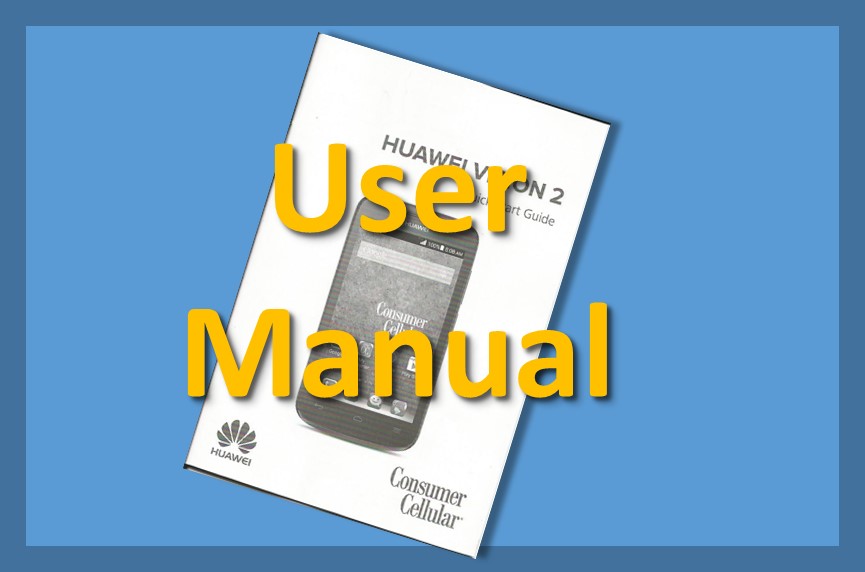
I recently purchased a new smartphone. It came with a small booklet of instructions. The booklet gave me the information I needed to enjoy my phone.

However, as useful as that phone instruction booklet was to me, that doesn’t make it the ideal booklet for everyone. For example, what if that tiny instruction booklet was the only document given to the people who had to manufacture the phone? It would be a worthless document for the manufacturer, because it only talks about how to USE the phone, not how to MAKE it. They wouldn’t know what to do.

Because the manufacturer is a different audience, with different needs, it needs a different document.


THE ANALOGY
The key documents from a finance department tend to be the:
·       Income Statement;
·       Balance Sheet; and
·       Cash Flow Statement.

Because they are such important documents, finance departments like to use them as much as possible. They even like to use them as the primary documents for strategic planning.

But forcing planners to use the income statement, balance sheet and cash flow statement as their primary documents is like asking phone manufacturers to rely on the owner’s instruction booklet as their primary manufacturing document. It’s inappropriate.

The phone user booklet is designed for people who want to use the finished product after it is made. It is not designed for the people who have to design, create and manufacture the phone. For them, other documents would be more useful.

Similarly, the income statement, balance sheet and cash flow statements portray a company “after the fact.” They show the finished condition of the financials. Their primary audience is not the people who build the business, but the people who interact with the finished product, like investors and bankers and regulators.

If you want to design, create and “manufacture” (i.e., implement) the business model, then you need other documents. Over the next several blogs, I will be describing the types of planning financial documents which should be used INSTEAD of the income statement, balance sheet and cash flow statement as your primary strategy financials.


THE PRINCIPLE
The principle here is that strategic planning is more effective if you use planning documents instead of user documents. In this blog, we will look at some of the shortcomings of applying “user documents” for planning. In subsequent blogs, we will look at superior planning documents for planning.

1) Only Numbers From Ledger
The first flaw is that the income statement, balance sheet and cash flow statements are primarily numbers from the general ledger. They don’t mention strategy anywhere (in words or numbers). There is absolutely no way of knowing what part of any number is connected to what strategic initiative or mandate.

For example, you may have a number of strategic initiatives which impact sales, but with a single sales line on the income statement, there is no way of knowing:

  • What are the expected baseline sales?
  • What sales impacts are specifically expected to come from each strategic initiative?
How can you test the reasonableness of your sales line if you don’t know what actions are connected to it and what is expected from each action?

Another problem with only numbers is that, as we all know, there is more than one way to hit a number. For example, I can drop manufacturing costs by eliminating manufacturing and only sell out of inventory. That will work only until inventory runs out, and then you are in big trouble. The overall strategy is ruined, but you will look great on your manufacturing expense number. Without a documented link between strategic actions and numeric outcomes, one can “game the system” and hit the numbers for all the wrong reasons.

So without words about strategy and specific numbers connected to each initiative (even if the numbers do not have a label in the general ledger), the document is fairly worthless as a strategic tool.

2) Bias to Cost Cutting
Standard financial documents are mostly full of expenses. Therefore, if you want to make a quick impact to these documents, there is a bias towards focusing on lowering expenses/cutting costs. Unfortunately, cost cutting is not the only strategic option, and there are often many far superior options. Perhaps instead of focusing primarily on cost cutting, you company would be better off with a strategy focusing on one of the following:

  • Improving Quality
  • Improving Speed to Market
  • Changing Distribution Channels
  • Expanding into New Geographies or Customer Segments
  • Broadening the Product Line
  • etc.
Even though these may be superior strategies, many of these initiatives would probably increase expenses in the short run. But, by using documents with a bias towards cost cutting, I may be hurting my chances of approving or executing on these superior options. I would be better off if I was using documents that have quality, speed, etc., as prominent in them as costs.

3) Linear
Most of the standard financial documents are linear in design: you start at the top and work your way down to the bottom. Unfortunately, strategic planning is more circular.

Take for example, the relationship between marketing and sales. One time, I was in charge of the advertising budget for a company. The budget person, in a desire to cut costs, asked me to cut the advertising budget by around 20%. I asked him if they were going to cut the sales line as a result of my cut in advertising. He said no. Therefore, I suggested to him that they cut the advertising to zero, since it was apparent they saw no connection between marketing levels and sales levels. If you don’t think sales will fall as advertising falls, you may as well eliminate the advertising completely.

The point I was trying to make was that there are strategic implications which ripple throughout a financial statement when you alter a key component (like marketing). You cannot change one line at a time in isolation and expect everything else to stay the same. At the same time, you have to change all the ripple effects, too. Therefore, you need planning documents which make it easier to see the strategic links to other financials.

4) Mixed Responsibilities
Most standard financial statements tend to be all inclusive—selling, operating, and overhead are all jumbled up into the same document. This makes it hard to create a sense of ownership and accountability for any standard financial document. And if something goes wrong, there is all sorts of finger-pointing to the other people included in the document.

A better approach would be separate planning documents more segregated towards one main area, with the links to the other areas spelled out.


SUMMARY
Just as the manufacturer of a phone needs different documents than the user of that phone, the “manufacturer” of a business strategy (planners and the ones the planners work with) needs different documents than those who interact with the finished product (bankers, investors, regulators). Right now, the primary documents from finance are pointed towards those who interact with the finished product. That’s fine for them, but not for the strategists. The strategists are the manufacturers of the strategy, so they need a different kind of document. In subsequent blogs, we will be discussing how those documents should look and work.


FINAL THOUGHTS
I also recently got a new washer and dryer. I’m glad they sent me the right type of documents. I hope you get the right types of documents to the participants building your strategy.

Wednesday, March 27, 2013

Strategic Planning Analogy #494: The 3 Keys to Success (Part 1)


THE STORY
When I was a young boy, I owned a Piggy Bank. It had two holes. The first hole was a slot at the top, used to put money INTO the piggy bank. The second hole was on the bottom. It was used to take money OUT OF the piggy bank.

My problem was that I tried to take money out of the bottom of the piggy bank more often than I put money into the top of the piggy bank. As a result, my piggy bank was almost always empty. That made it a fairly worthless bank.


THE ANALOGY
Businesses are a lot like that piggy bank. Money comes into the business through sales.  It is like putting money into the piggy bank’s top slot. Money is taken out of the business through events like salaries, profit sharing and dividends. That is like taking money out of the bottom of the piggy bank.

If you take money out of the business faster than you put it in, the result is similar to my empty piggy bank. It becomes worthless.

Most traditional small entrepreneurs I’ve met get this principle. They put a major emphasis on cash flow, to make sure that money coming in the top slot exceeds money going out the bottom hole. They realize that if the money is not coming in the top, there will be no money for them to buy groceries to eat. 

This principle, however, seems to get lost in a lot of modern digital/social businesses and large enterprises. The connection between inflows and outflows becomes less obvious. After all, there are digital/social businesses out there valued at huge sums of money (and making their owners rich) which have little or no source of income coming into the top slot.

Without strategic concern for both holes, the business (piggy bank) eventually becomes empty and worthless.  This is why you ended up with the bubble bursting on the original dotcom boom and many stock market disappointments in the current digital/social boom. The private equity contributors to the piggy bank eventually want to get their money back out. But since more money was coming out the bottom than was going in the top, there was not enough to satisfy everyone.


THE PRINCIPLE
In this blog (and the next two), I will be talking about the keys to real success in business. I’ve spent a lifetime in the business world and have witnessed first hand (and second hand) a large number of successes and failures. 

Based on what I have seen, it appears to me that there are three key differences between the big winners and big losers. So in this and the next two blogs, I will be looking at these three characteristics which differentiate the winners from the losers. 

Passion for the Business Model
The first characteristic has to do with passion—that which captures the attention and focus of the leaders (and their followers). In the losing companies, the passion and focus tends to be on wealth.  The focus is on profits or personal wealth—making them as large and as quick as possible. By contrast, the passion of the successful firms tend to focus on the business model. The focus is on making the model ever better at serving the customer.

Does this mean that profits are bad? Is it wrong to want your business to have larger profits? Of course not. But if you are more passionate about profits than the business model, then you are like me when I kept taking money out of the bottom of my piggy bank without putting money in the top. Eventually, the model falls apart and the business becomes a worthless empty shell.

If you ignore the business model, then the only way to keep taking money out of the bottom is by “financial engineering.”  This is essentially the idea of putting other people’s money in the top so that you can keep on taking out money from the bottom. As a child, that financial engineering would be to convince my father to loan me some money beyond my allowance, so that I could keep on taking out money beyond what I earned. In the business world, this consists of taking on extra debt or equity, either private equity or public equity. 

The problem is that these types of contributions to the piggy bank come with strings attached.  These contributors also want a turn at taking more money out of the bottom of the bank than what they put in the top. And, as it turns out, it is impossible for all of you to take out more from the bottom than you put in the top if the business model is not sufficiently multiplying the money.

By contrast, if you have a passion for the business model, you will be always looking for ways to improve the way the business fulfills its position in the marketplace. This leads to efficiencies (a less expensive way to serve) and effectiveness (a more valuable service for customers). This makes the money in the piggy bank grow by getting satisfied customers to contribute to your success in ever more profitable ways.

Hence, the irony. If you want a lot of profits, don’t focus on profits; focus on the business model.  Focusing alone on profits can lead to bad behaviors, such as:

  1. Underinvesting in the business model;
  2. Ruining the Balance Sheet;
  3. Short-term gains which ruin long-term prospects;
  4. Ruining the relative value for the customers (as you give more value to yourself than to your customer)

These actions all cripple your ability take money out of the bottom of the bank over the long haul.  However, if the passion is about improving the business model, the profits will be there for years to come and the piggy bank will never be empty.

Example #1 Euro Zone
Just look at the economic challenges in Europe.  Rather than a passion for building a solid business model for a continental economy, the Euro Zone has been plagued by governments and citizens who keep taking more out of the bottom of the piggy bank than is put in.  To fund this passion of taking money out, the governments took too much of other people’s money in the form of debt. Now the piggy bank has nothing but debts that cannot be paid. And the governments seem unwilling to make the tough choices on how to fix the broken business model.

The exception is Germany.  And guess what—the Germans have focused for decades on building a solid economic business model. This business model passion means that more is going into the piggy bank than is coming out. Germany is solid

Example #2: Formica
Awhile back, I was in discussions with the top executives of Formica about doing some consulting.  They explained to me the history of the company. Decades ago, Formica had been a strong brand with great profits. They essentially owned the countertop industry. 

But then, Formica was bought by people whose passion was profits. They started taking more out of the bottom than was coming in at the top. This caused two problems. First, the countertop marketplace was changing and they underinvested to meet the challenge of the change. This hurt the status quo business model, weakening the ability of Formica to fund obligations. Second, taking too much out of the bottom required loading up the balance sheet with debt, thereby increasing obligations. Eventually, since they couldn’t make ends meet, they sold the company to others.

The “others” also had a passion for profits and continued these practices. In due time, they sold the business, too. After several iterations of this process, Formica had been so weakened, that it had become an empty shell full of IOUs that could not be paid.

Eventually, Formica ended up in the hands of Fletcher Building of New Zealand. This was a company which had a passion for the building materials business. They focused on the business models within the industry they loved. As a result of their passion for the business model, they are bringing back Formica from the dead.

Example #3: Amazon
Recently, I had discussions with some executives at Amazon. In my discussions with them, they never really talked about profits. Their talking pointed to their passion for the Amazon business model. All they wanted to do was improve that model by making it faster, easier and cheaper for customers to interact with Amazon.

As a result, the Amazon business model keeps getting better and better. This is increasing their competitive advantage in the marketplace. Yes, the near-term profits have recently suffered a bit, but that was because of extra investments in the business model, not a failure to win in the marketplace. Amazon is on strong, solid footing. It survived the dot com bust and the digital/social slump. And it has the big box stores around the world panicking as they continually lose share to Amazon. Founder Jeff Bezos was the 2012 Fortune Businessperson of the Year. This is a company built for long-term success.


SUMMARY
Long-term winners tend to have characteristics that are different from long-term losers. One of those characteristics has to do with where the passion lies. The losers tend to have a narrow passion focused around rapid personal wealth-building. This usually leads to bad behaviors which choke the prospects for long-term business success. They prematurely empty out the piggy bank.

The winners, by contrast, tend to have a passion for the business and its business model. They are more concerned with improving how the business works in the marketplace than how much they can pull out of the business for themselves. They get interested in all the little details about how to make the business better. They build piggy banks which are full for a long, long time.


FINAL THOUGHTS
Now that I am grown up, I have an electric bank which sorts coins and puts them into the appropriate paper rolls.  And when the rolls get full, I take them to the bank rather than spend it right away. That is the better path for the long term. Is your corporate culture promoting actions like what I did with my boyhood bank or my adult bank?